About a Living Culture
Jackson Heights Queens, New York
About a Living Culture
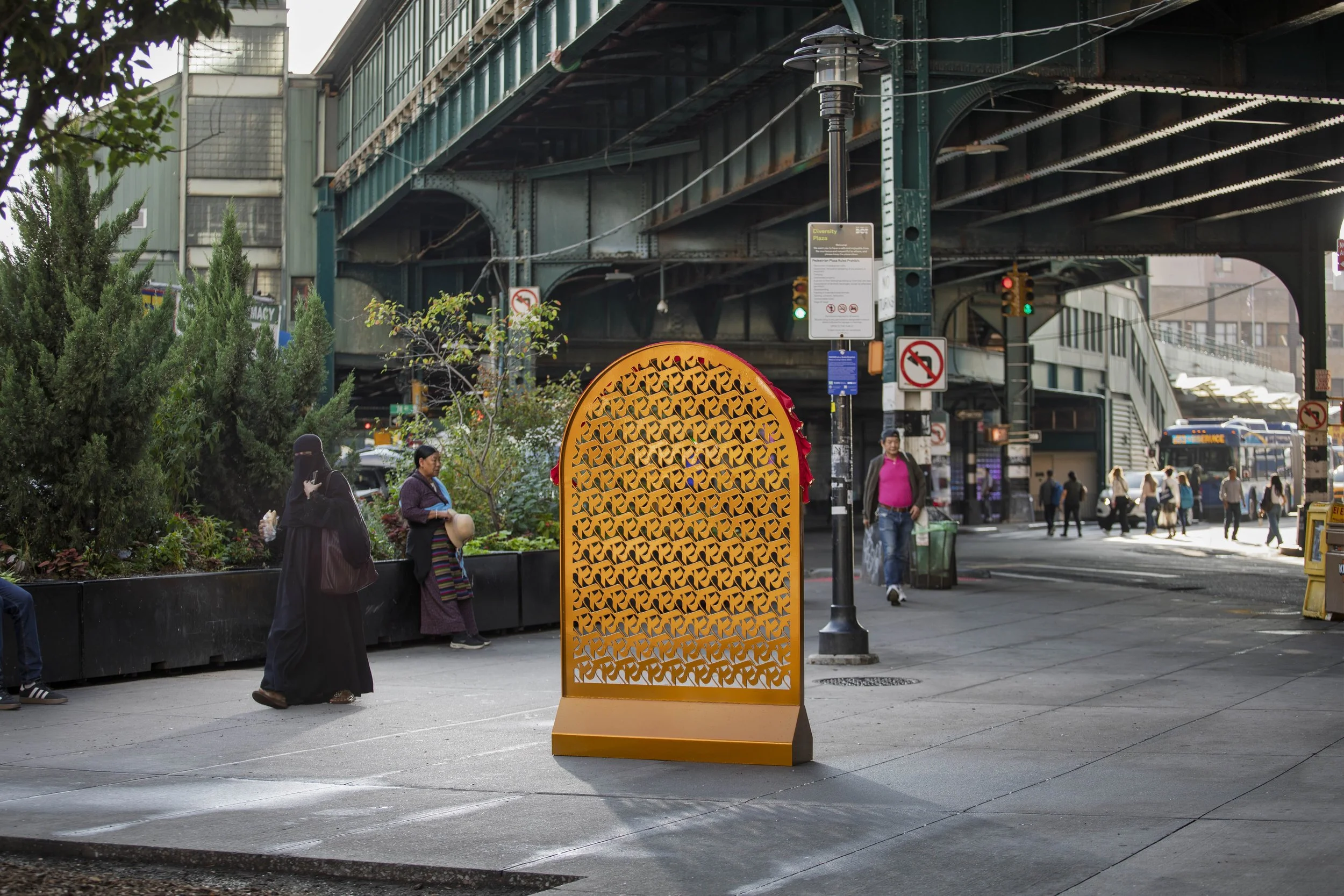
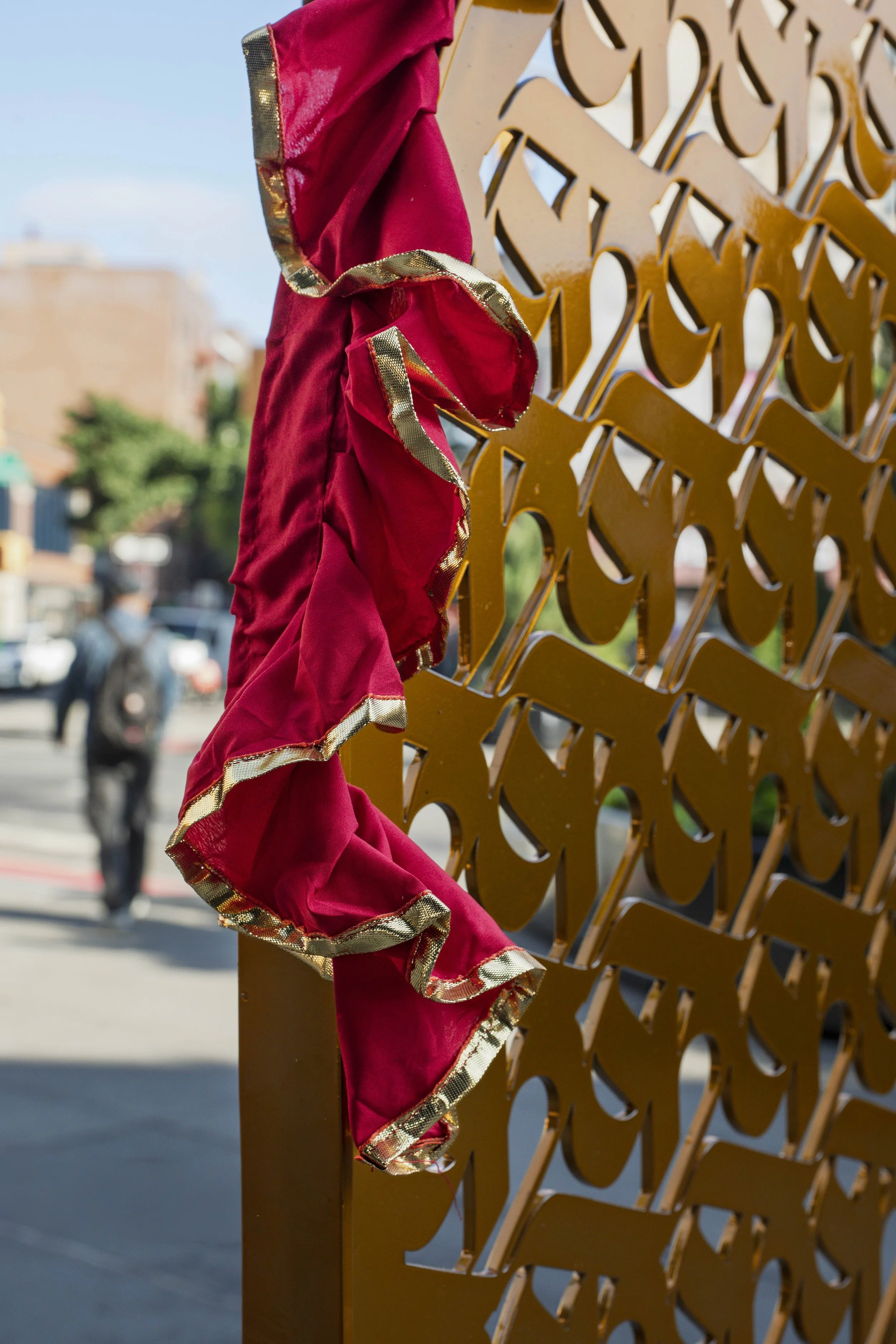
About a Living Culture asserts that culture is not something preserved in isolation, but something practiced, negotiated, and shared among diverse communities.
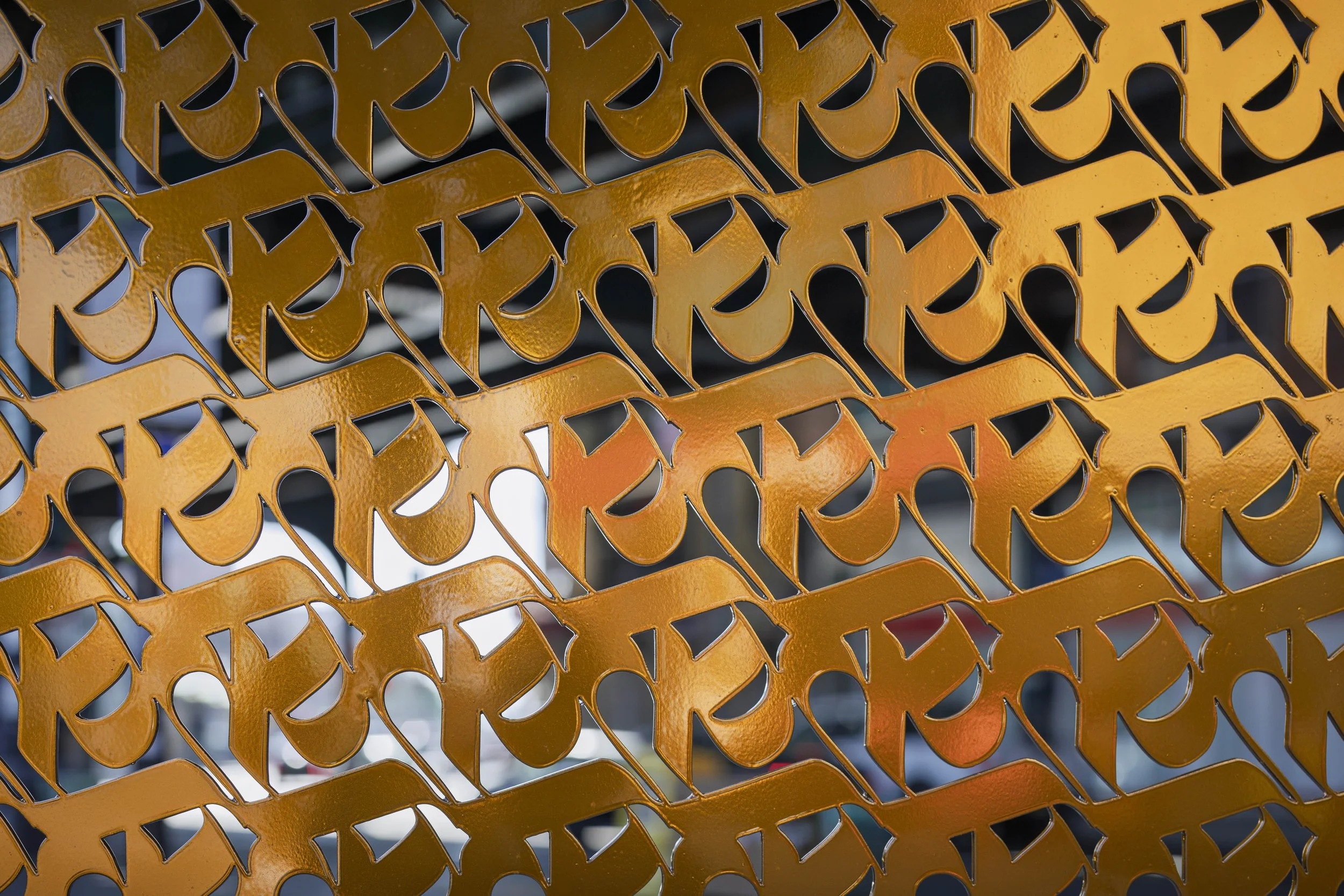
The sculpture draws from architectural thresholds and ceremonial structures I grew up around in Kathmandu, as well as jhallar, the decorative fringe commonly used in South Asian rituals, processions, and domestic spaces to mark moments of care, protection, and gathering. Repeated calligraphic gestures derived from Devanagari script form a structural language that creates rhythm and pause. As in my paintings and murals, language becomes material, shaping space and experience.
The jhallar introduces movement and the “living” part into the work. As it flutters and shifts with the wind, it becomes the living element of the sculpture, continually responding to its environment. In contrast, the steel structure remains fixed and grounded, symbolizing the enduring foundations of culture. Together, these elements reflect how traditions remain rooted while adapting across time and lived experience.
The work also speaks to the presence of living practitioners who carry these traditions forward every day. By existing in public space rather than remaining confined to museum interiors, About a Living Culture affirms that these cultural forms belong within daily life. It is a declaration that we are not artifacts of the past, but participants in an ongoing, living culture.
About a Living Culture is on view in Diversity Plaza, Jackson Heights in Queens, New York till September 2026. The sculpture is created in partnership with the Rubin Museum of Art and NYC DOT Art. Fabricated by Black Cat Labs.
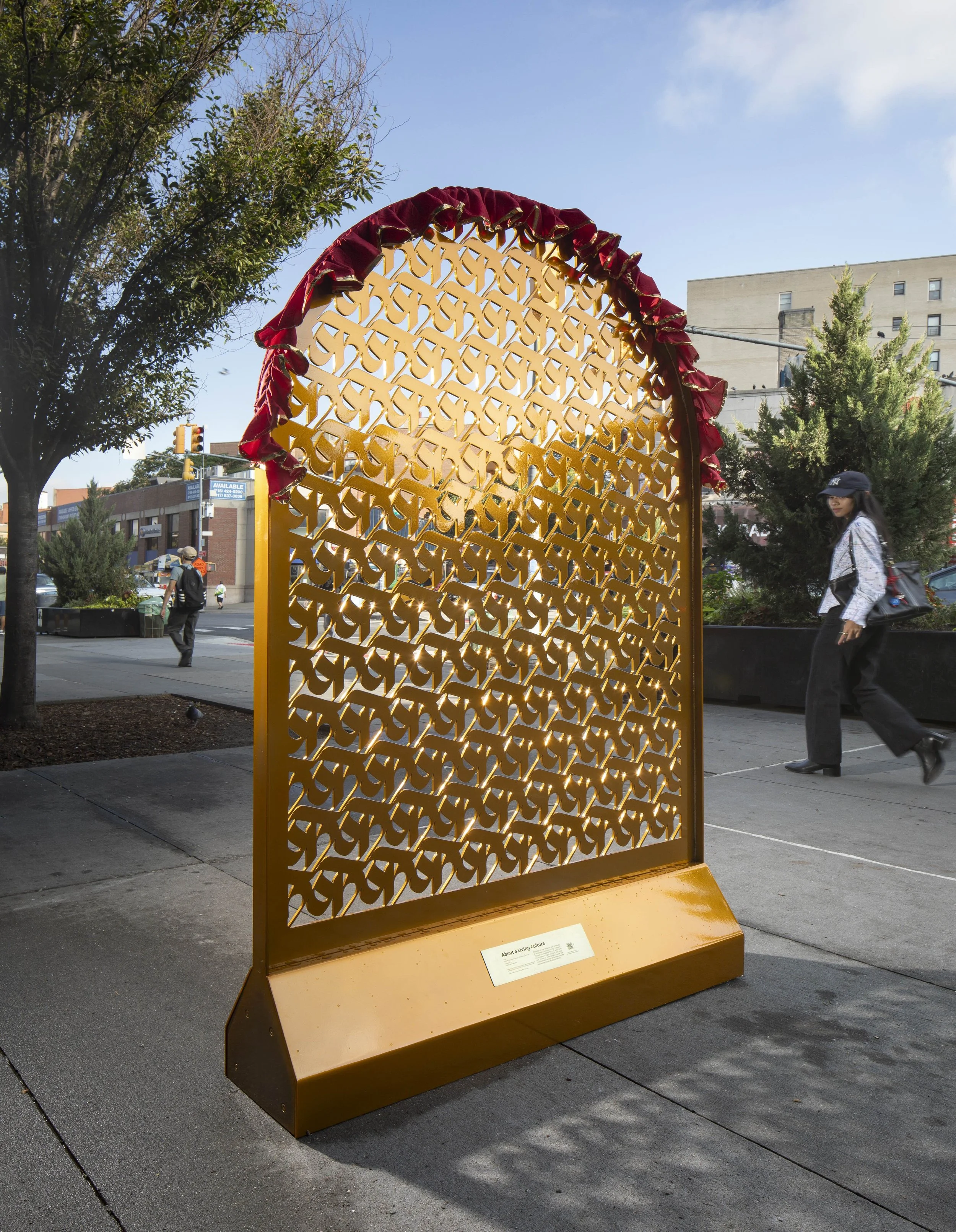
About a Living Culture, 7ftX4ft, Powder Coated Steel and Fabric, 2025
Calling the Earth to Witness
Isabella Stewart Gardner Museum, Boston
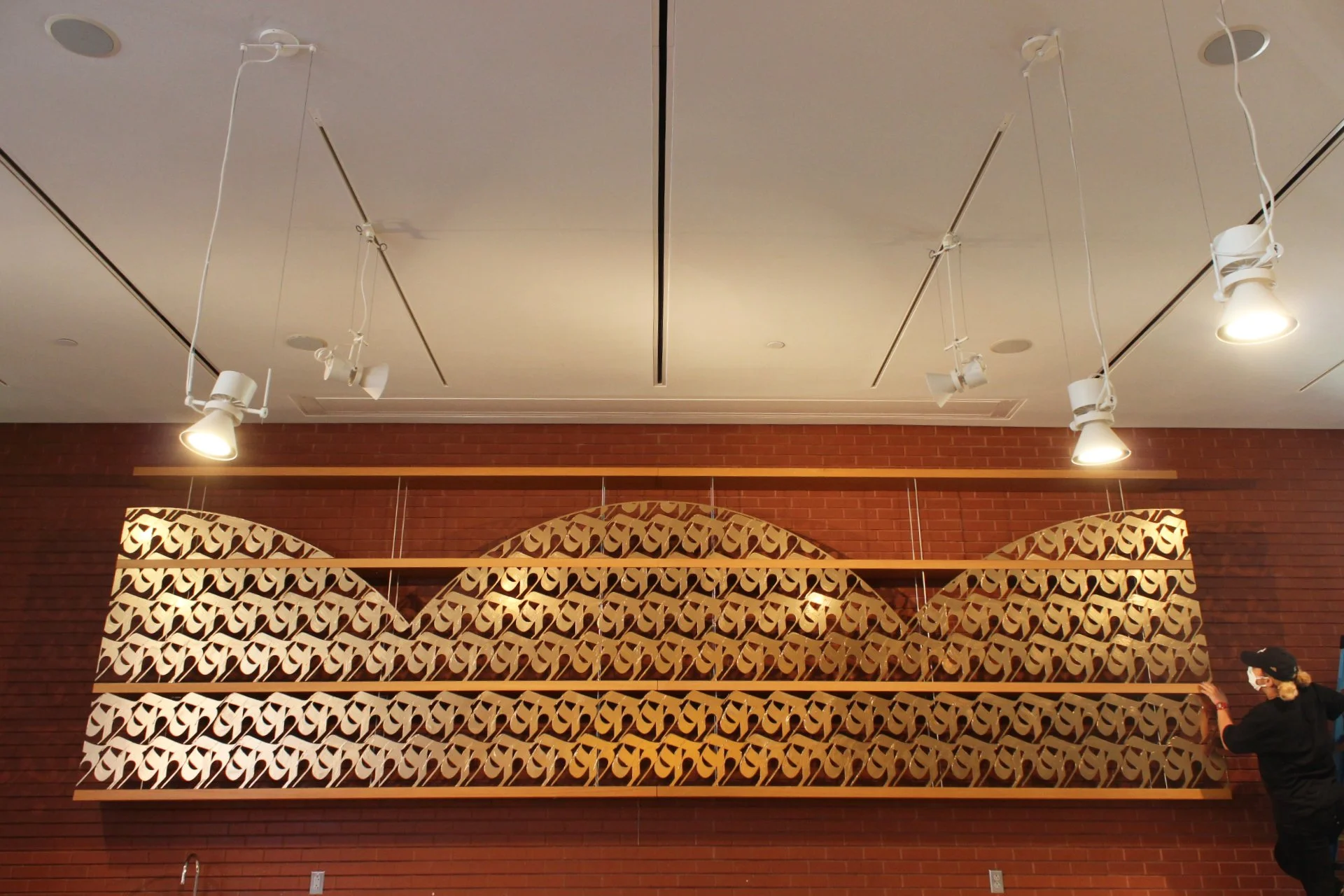
Calling the Earth to Witness
Gardner Museum, Boston
2020
5ft X 20ft
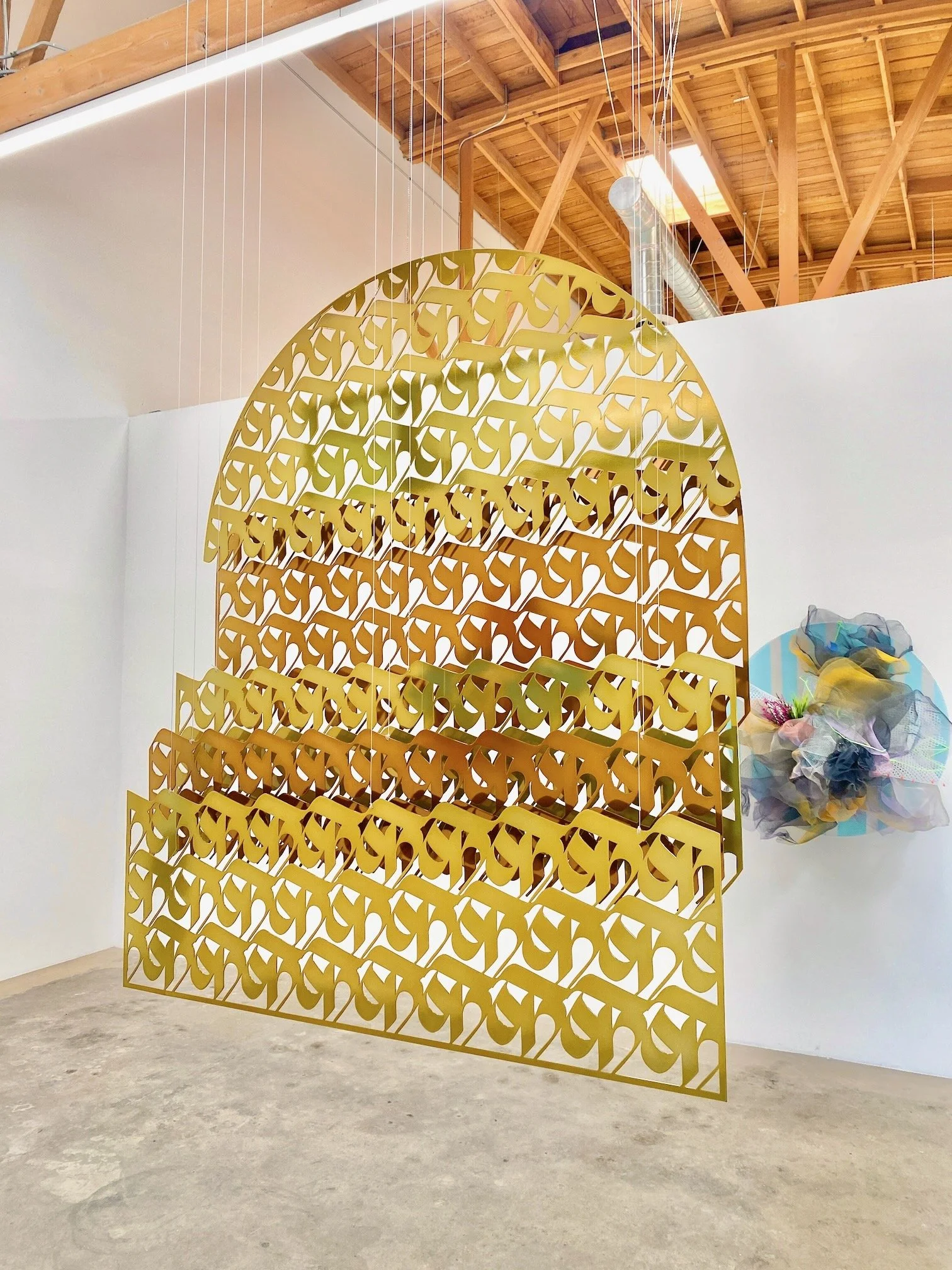
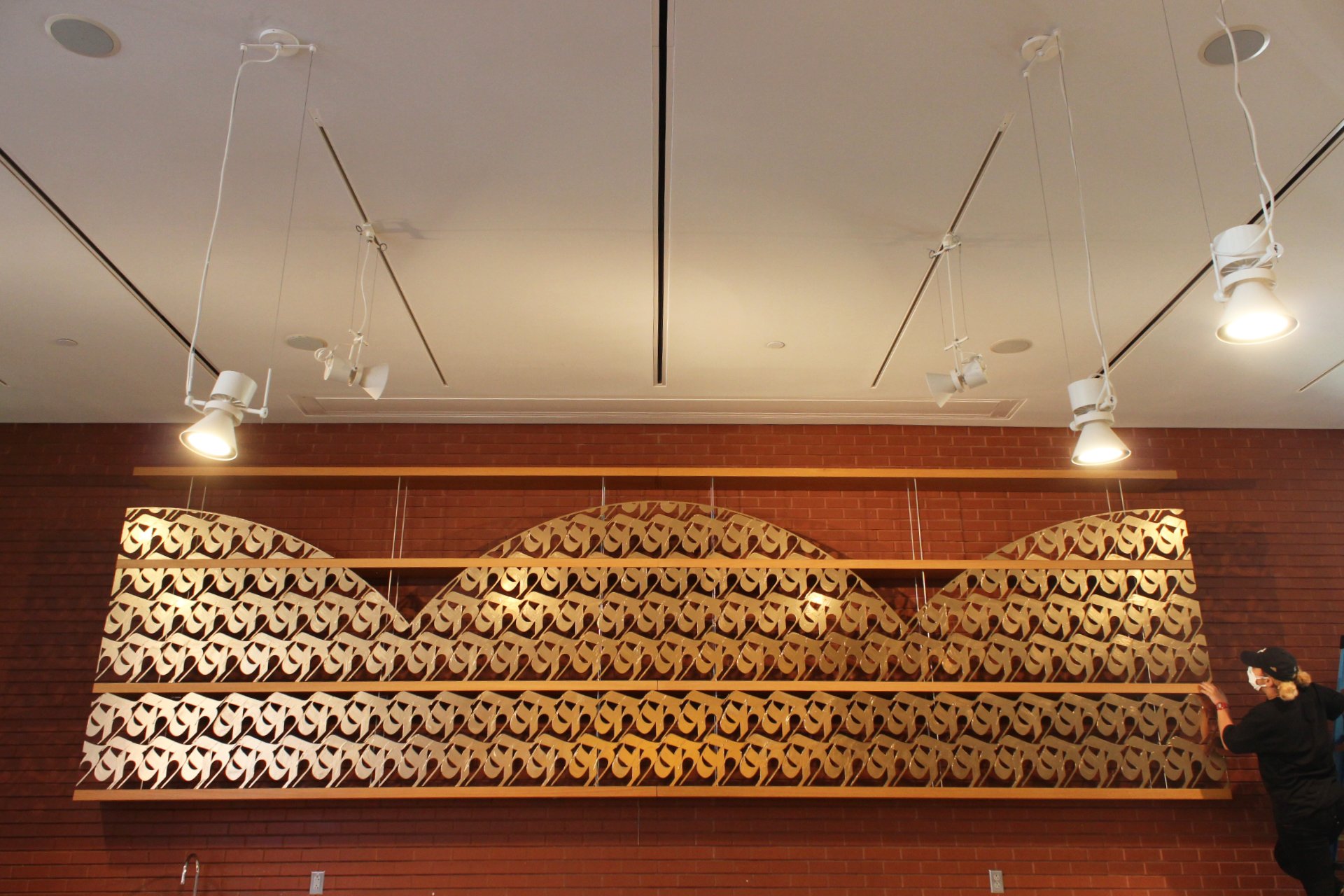
Calling the Earth to Witness is a sculptural work commissioned by the Isabella Stewart Gardner Museum’s Bertucci Studio. For this work, I found inspiration in the sacred, the regal and the cherished.
While exploring the museum’s collection, the only object that most closely represented my culture was this statue of Buddha. Taking this figure as a lead, I wanted to find more gold looking objects. When I saw the Simone Martini piece, it reminded me of Nepali temples I grew up around in Kathmandu. The common factor between these two works of art both signified devotion, respect and love. But who gets to be under these golden arches?
The sculpture was created by almost one hundred shapes of the first letter of the Nepali alphabet “ka”. It represents beginnings and foundations of language and communication. How do we verbally and visually communicate who gets to be under these golden arches?
The sculpture aims to transform the studio into a community space where everyone can belong under the golden arches.
See full interview here. The sculpture was fabricated and engineered by Black Cat Labs




Half-nots
Institute of Contemporary Art (ICA), Boston
The structure of Half-Nots is inspired by ceremonial umbrellas used in Newari festivals (jatras) in Kathmandu, where a central figure or deity is sheltered beneath an umbrella as a symbol of protection. I wanted to create a similar canopy of protection for my community entering the exhibition space, particularly in light of the current social and political climate.
Elements of jhallar: the decorative fringe commonly used in South Asian rituals and domestic spaces are a reference to care, shelter, and threshold-making. Here, they function less as ornament and more as a spatial signal, softening the boundary between inside and outside.
The title Half-Nots plays on the idea of “haves” and “have-nots,” while also reflecting the halved condition of migrant life where one’s sense of home, belonging, and identity is split across places. Half-Nots becomes a name for this in-between existence. The title also references “touch-me-not” plants, whose name signals restraint yet invites interaction, mirroring how migrant bodies and lives are continually tested, examined, and crossed despite boundaries meant to protect them.
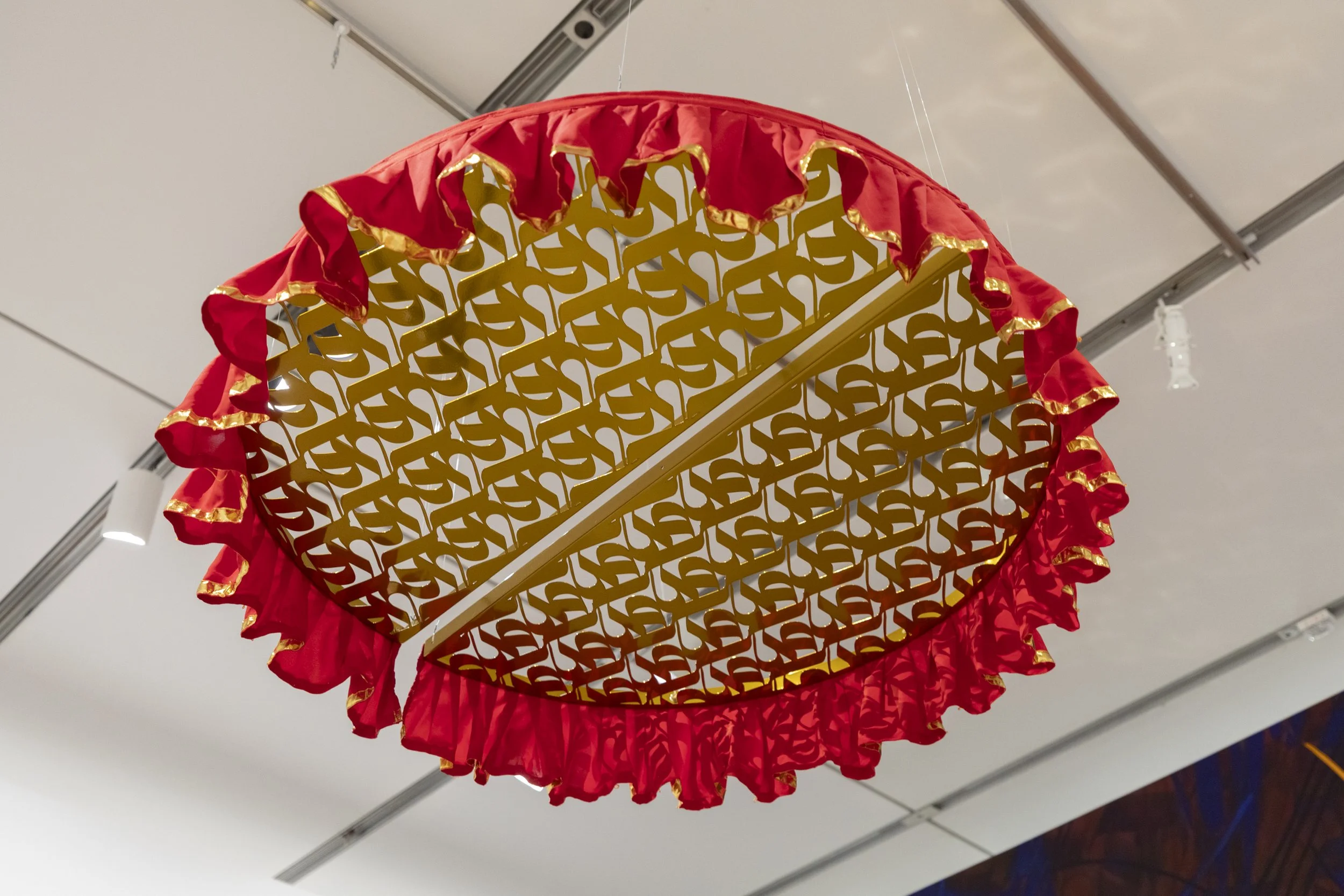
Half-nots 4ft Diameter Powder Coated Steel and Nepali Fabric 2025
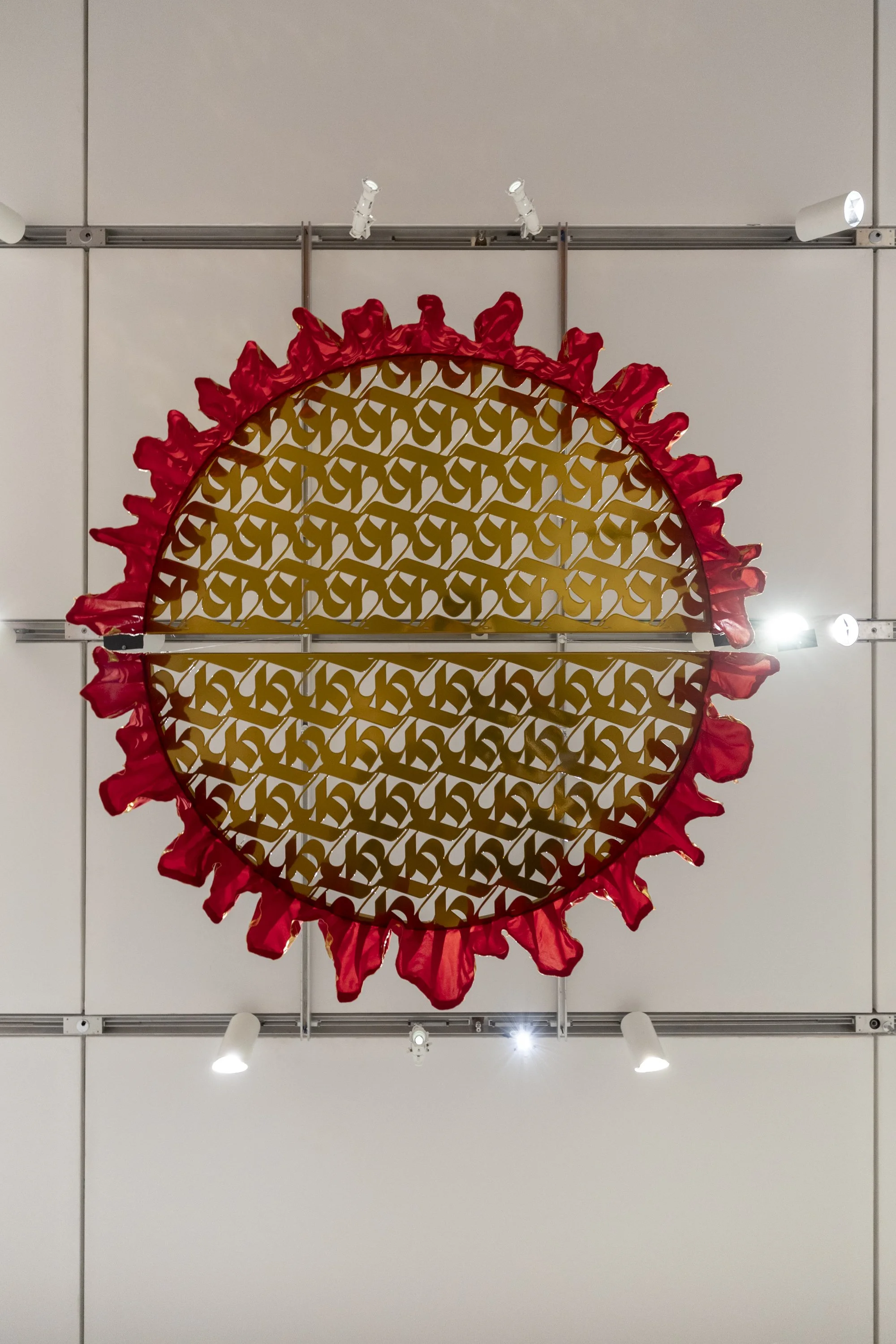
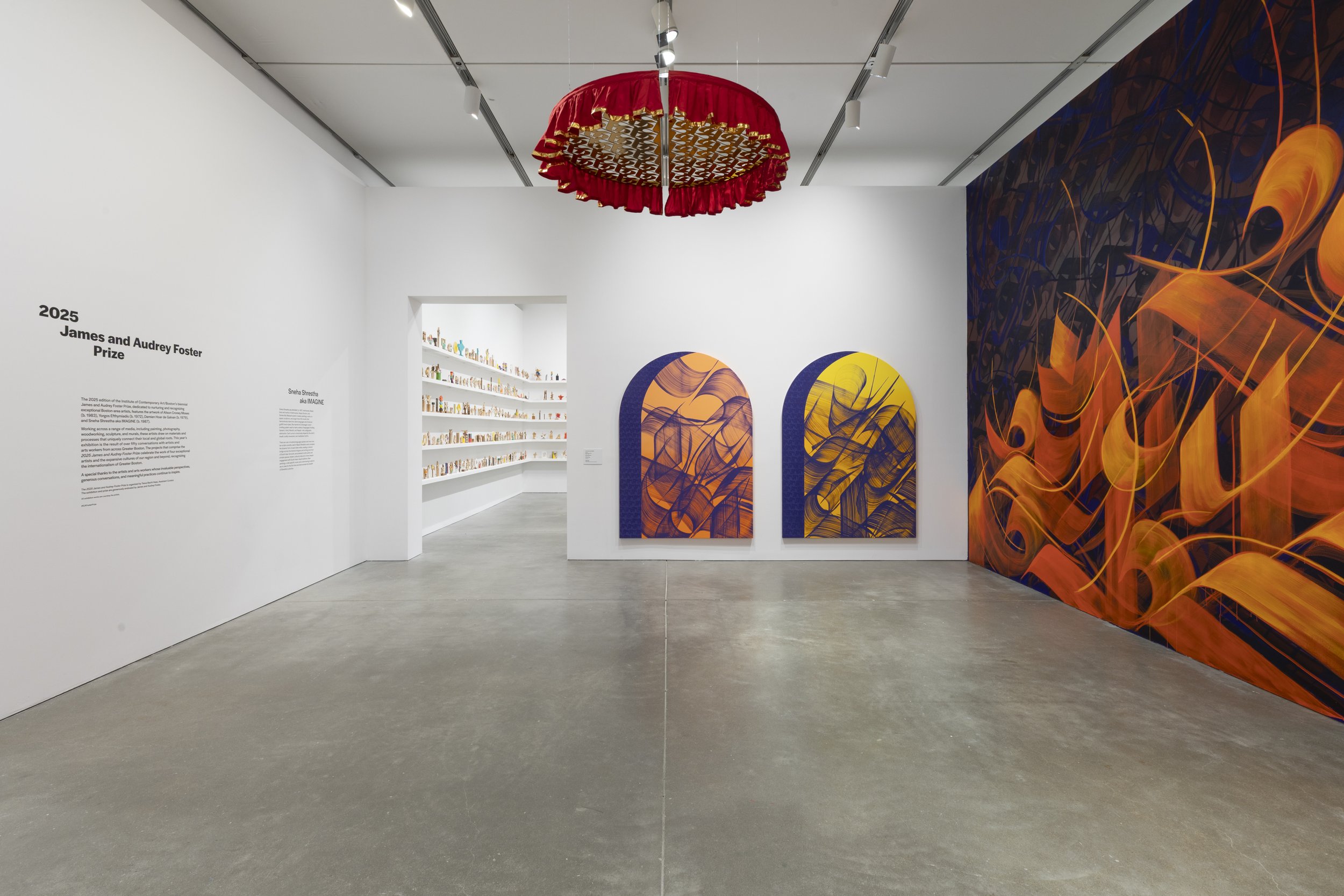
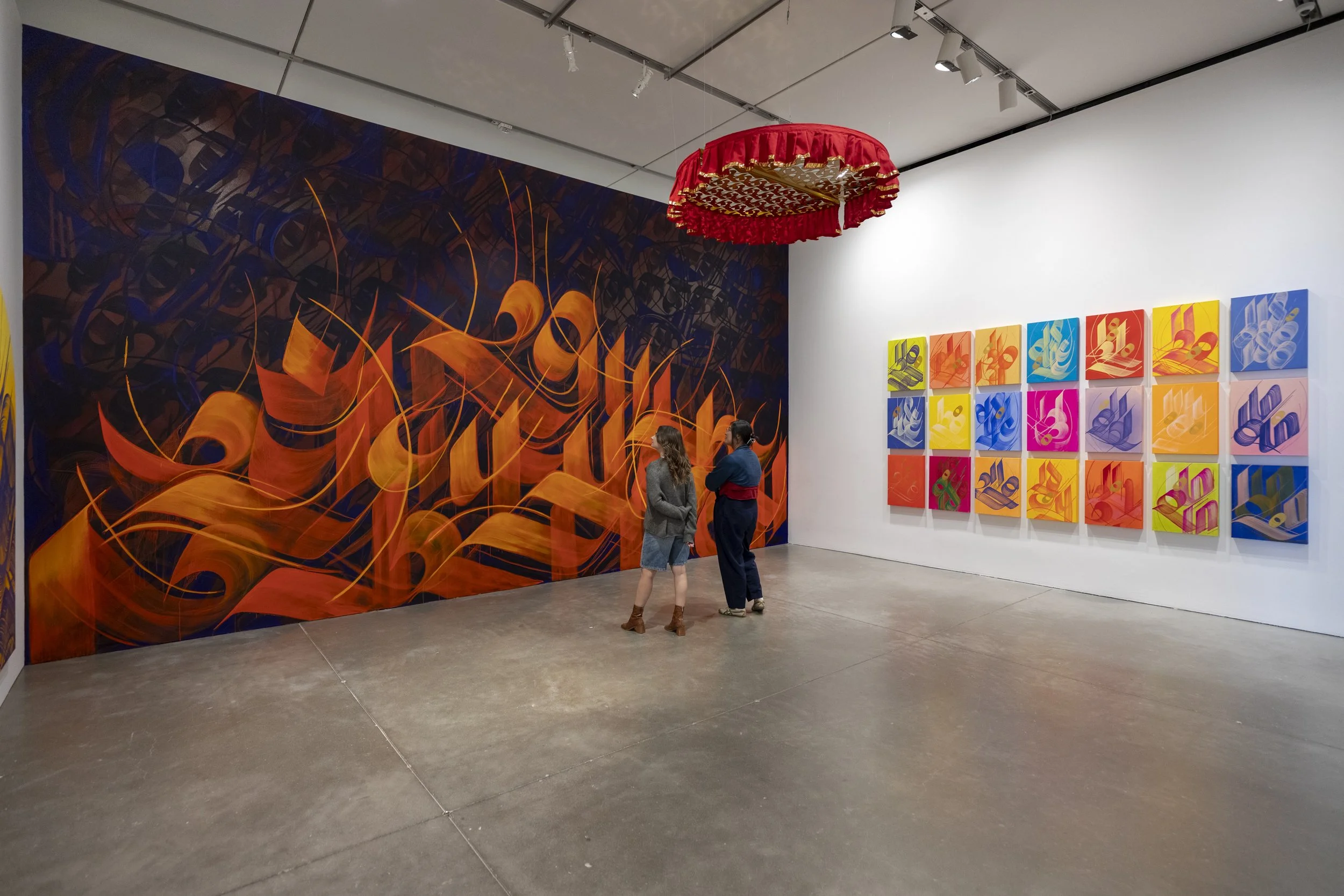
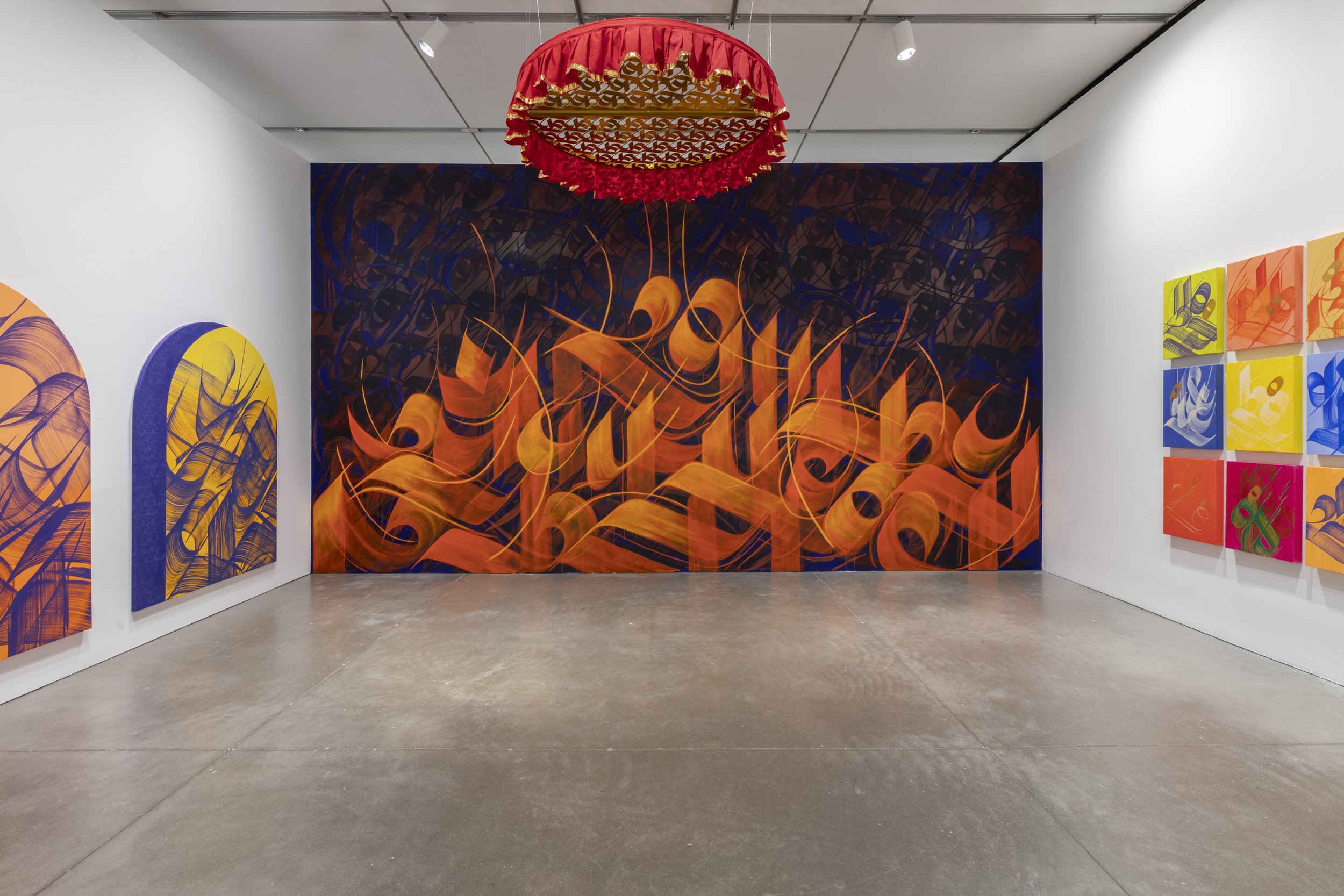
Installation View of Half-Not, Institute of Contemporary Art, Boston 2025
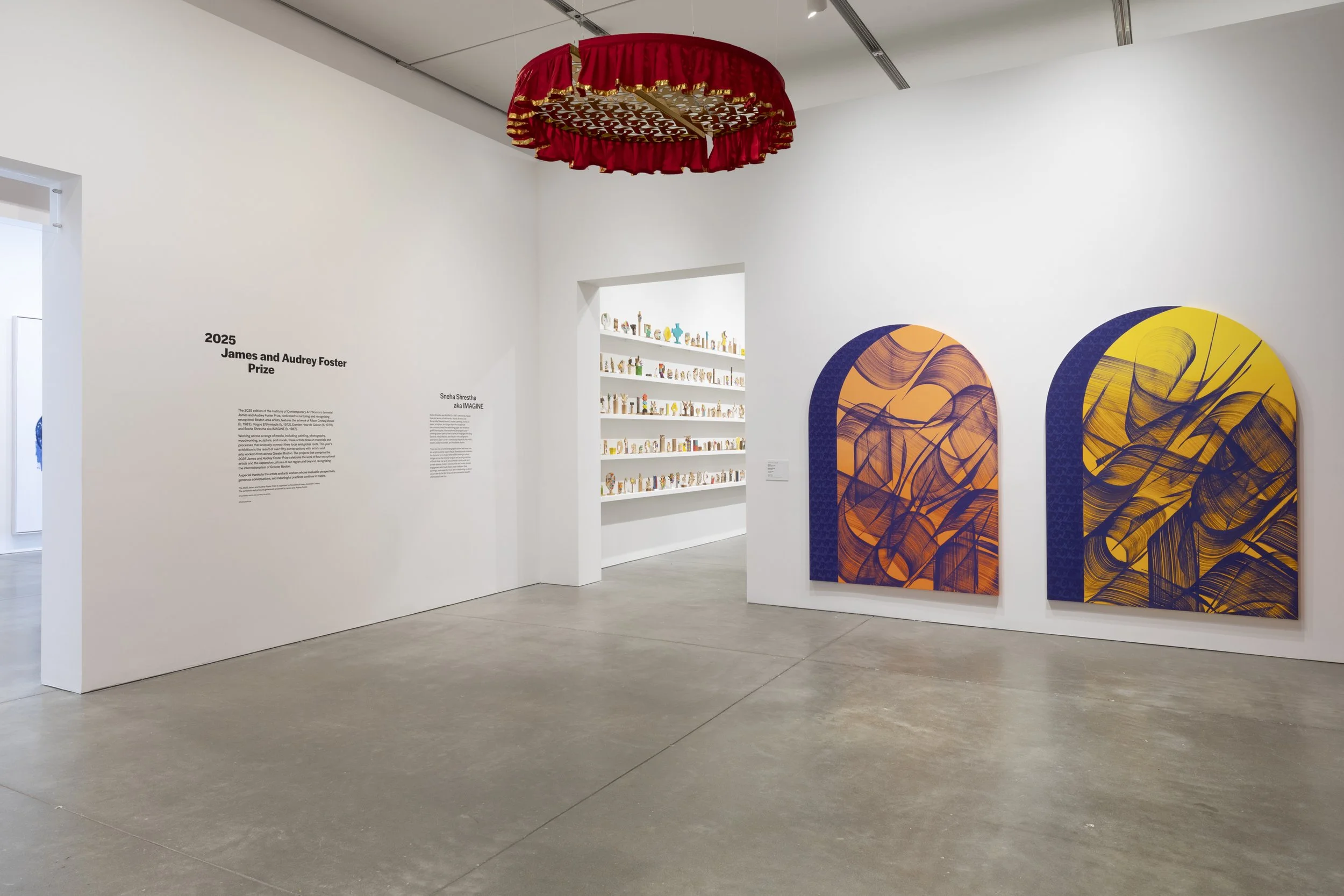
Dwarpalika (Temple Guardian)
Harvard Art Museums, Cambridge


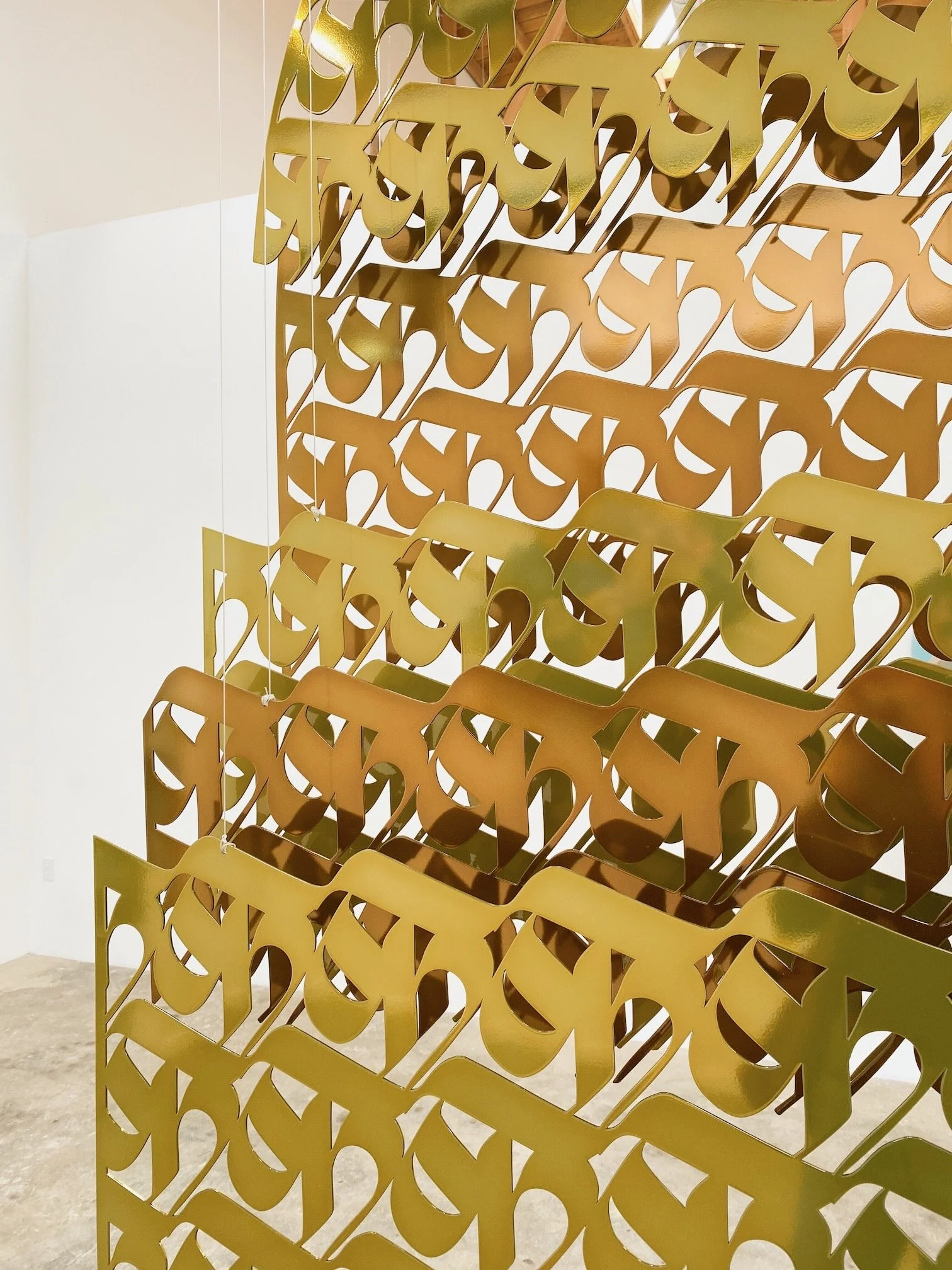
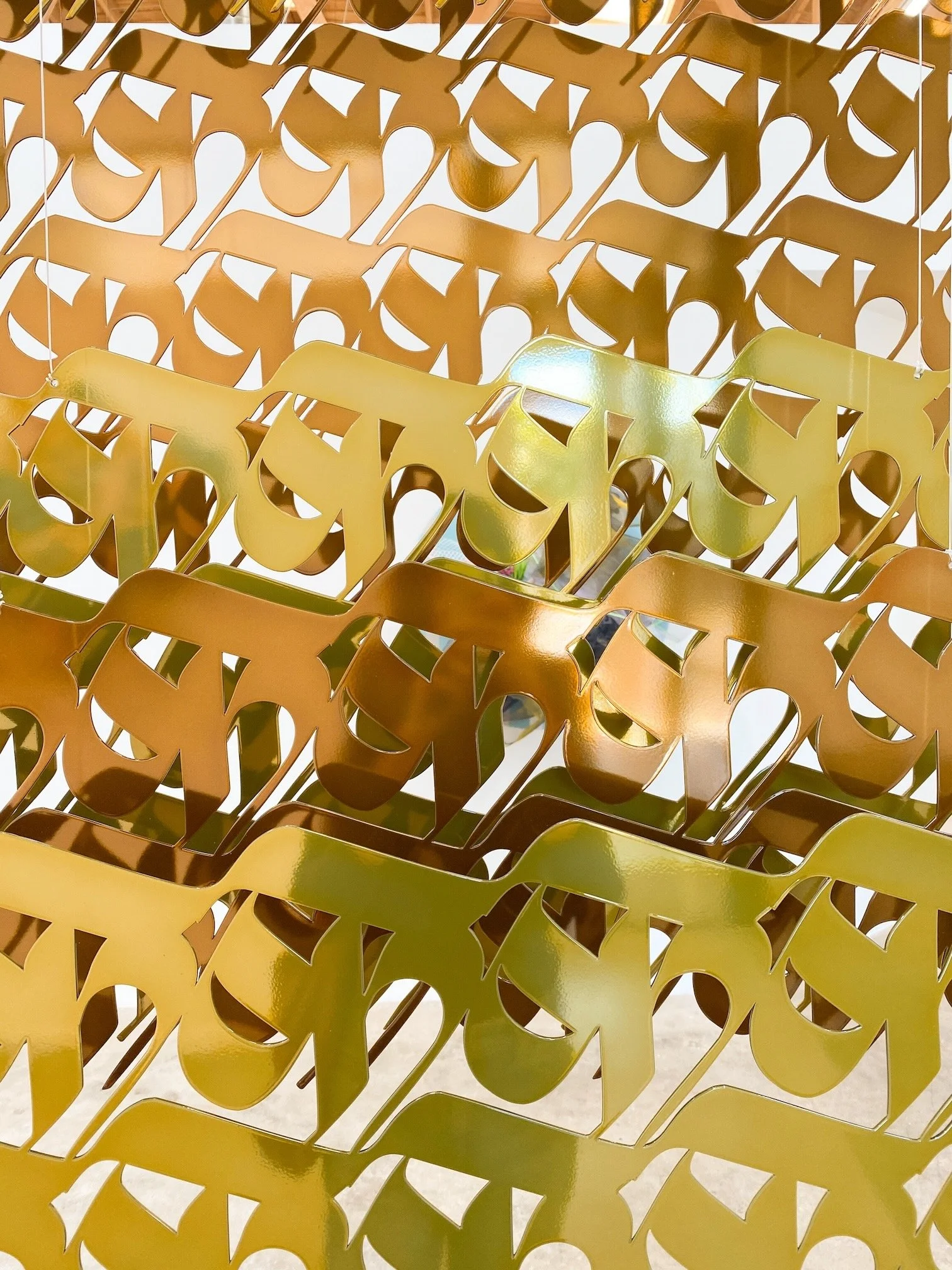
Dwarpalika (Temple Guardian) is inspired by different architectural elements that can be found throughout Shrestha’s hometown of Kathmandu. The title refers to female divine beings that guard the entrances to Nepali temples. The arched shape resembles the doorways of these revered and sacred spaces, while the patterned composition alludes to a jali, a type of window distinct to South Asia that is notable for its pierced and latticed screen. The openings allow for light and air to pass through while the structure shields from elements like the harsh sun and rain. In Nepal, it is known as an ankhi jhyal (“window for the eye”). Here, to create the lattice, Shrestha repeats the first letter of the Nepali alphabet, “ka” (क). Like her murals, Shrestha’s sculptures play with surfaces and patterns to transform the space they are created for.
The metallic finish of the sculpture alludes to the final process of bronze casting, which is to highly polish a work so that it resembles gold. It is a technique that is used in the creation of statues of Hindu deities and Buddhas across South Asia, which can be found in homes, storefronts, and temples, as well as Nepali shrines and temple architecture. Gold also has personal meaning for Shrestha, as it reminds her of her mother and the jewelry she wears, in addition to the artist’s iconic gold necklace featuring her mother’s name.
Dwarpalika (Temple Guardian)
2023
Steel and brass (copper alloy)
182.88 x 152.4 cm.
The exterior of the Patan Palace Museum featuring ankhi jhyal. Patan Durbar Square, Patan, Lalitpur, Nepal, 1734. Photo:: Sneha Shrestha, 2022
Apsara
This work is inspired by architectural elements found throughout my hometown of Kathmandu. The title refers to female divine beings who guard the entrances to Nepali temples. The arched shape echoes the doorways of these revered spaces, while the patterned composition draws from jali, a distinctive South Asian window with a pierced, latticed screen. These openings allow light and air to pass through while offering protection from elements like harsh sun and rain. In Nepal, this form is known as an ankhi jhyal, or “window for the eye.”
The sculpture draws from architectural languages of arches, repetition, symmetry, and lattice. These forms were part of my everyday visual language growing up and shaped how I understand space as something that carries care, responsibility, and presence. To create the lattice structure, I repeat the first letter of the Nepali alphabet, ka (क). Writing systems organize thought, movement, and belonging, and here language becomes structure. The repetition of ka reflects how identity is formed through constant documentation, translation, and repetition across systems of migration.
Like my murals, this sculpture engages surface and pattern to transform the space it inhabits. The gold-toned finish references bronze casting traditions from South Asia and ritual objects I grew up around. The brass component signifies a living essence, evolving over time through patina, much like the brass and bronze statues in Kathmandu that are regularly polished and restored before ceremonies. This practice reflects cultures that continue to adapt and evolve rather than remaining fixed in the past.
The metallic surface alludes to the final stage of bronze casting, when works are polished to resemble gold, a technique commonly used for statues of Hindu deities and Buddhas found in homes, temples, and shrines across South Asia. Gold holds personal significance for me, recalling my mother and the jewelry she wears during special occasions.